
• Skip to main content
  • Skip to secondary menu
  • Skip to primary sidebar
  • Skip to secondary sidebar
  • Skip to footer

  • COVID-19
  • Opinion
  • Health IT
    • Behavioral Health
    • Care Coordination
    • EMR/EHR
    • Interoperability
    • Patient Engagement
    • Population Health Management
    • Revenue Cycle Management
    • Social Determinants of Health
  • Digital Health
    • Artificial Intelligence
    • Blockchain
    • Mobile Health
    • Precision Medicine
    • Telehealth
    • Wearables
  • Startups
  • M&A
  • Value-based Care
    • Accountable Care (ACOs)
    • Medicare Advantage
  • Life Sciences
  • Research

IT/Security Leaders Can No Longer Rely Solely on Perimeter Security

by Syed Hamza Sohail 12/16/2022 Leave a Comment

  • LinkedIn
  • Twitter
  • Facebook
  • Email
  • Print
IT/Security Leaders Can No Longer Rely Solely on Perimeter Security

What You Should Know:

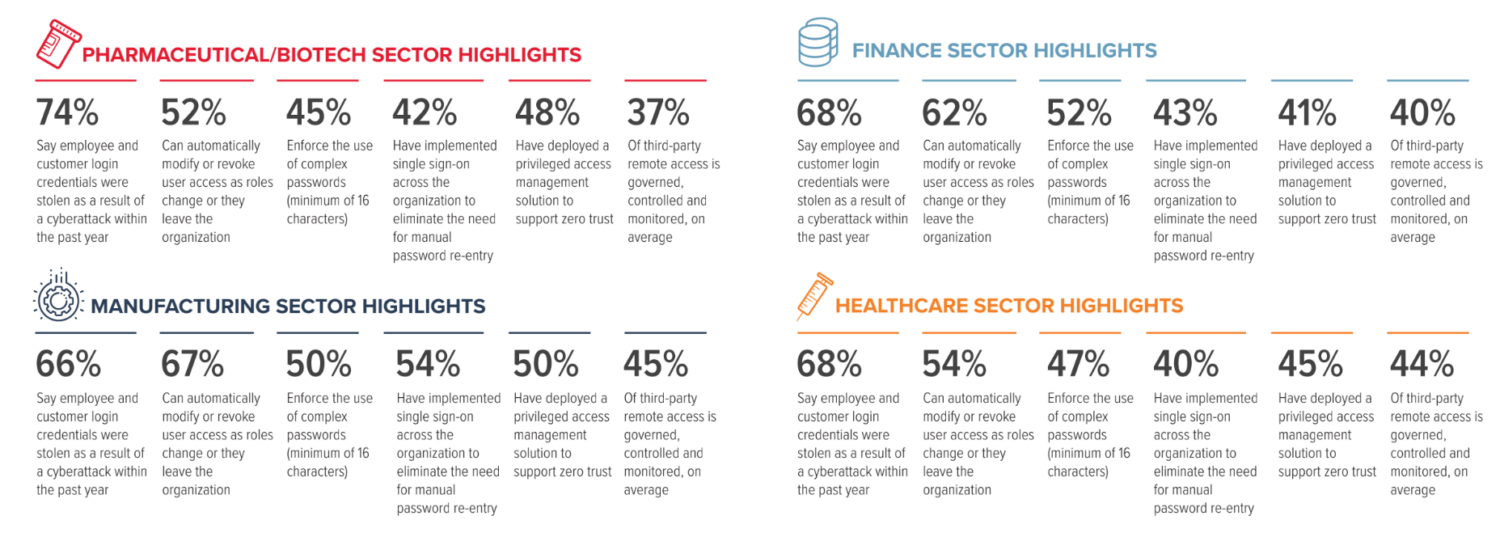
– Imprivata, the digital identity company for life- and mission-critical industries, today released new research that reveals over 91% of security leaders agree they can no longer rely solely on perimeter security to combat and respond to cyber threats, with 99% having experienced a cyberattack in the past year.

– The report outlines how healthcare, finance, manufacturing, pharmaceutical, and biotech organizations are approaching cyber and privacy risks. Cross-industry, 58% cite an increased frequency of attacks –to the tune of 21%, on average. Moreover, the rise of remote work has largely contributed to the growth of attack surfaces. Subsequently, 67% are focusing on security beyond the firewall as one of their top three investment priorities this year. Commonly referred to as “identity-based” or “identity” security, this approach is focused on ensuring users are only able to access the data and resources they need –a cornerstone of Zero Trust.

The Growing Concerns Regarding Cyber Threats

Imprivata is the digital identity company for mission- and life-critical industries, redefining how organizations solve complex workflow, security, and compliance challenges with solutions that protect critical data and applications without workflow disruption. The study was conducted by Vanson Bourne on behalf of Imprivata and includes insights from more than 750 IT security leaders spanning healthcare, finance, manufacturing, pharmaceutical, and biotech organizations across the US, UK, Australia, and Germany.

Though the concept of Zero Trust isn’t new, the adoption of technologies to facilitate a Zero Trust Architecture (ZTA) varies. “What we learned from this data is that businesses are under significant strain to mitigate attacks and manage the eye-watering costs when they occur. Yet less than half have the recommended digital identity technologies in place to protect themselves,” said Wes Wright, chief technology officer at Imprivata. “Despite the widespread familiarity with Zero Trust principles, fewer than half of those surveyed have adopted the foundational technologies needed to achieve them.” 

Solutions like identity governance, privileged access management (PAM), vendor privileged access management (VPAM), multifactor authentication (MFA), and single sign-on(SSO) enable greater security and compliance without negatively impacting end-user workflows. The low adoption rates seen in the study may be a result of apprehension; that doing so will hinder user productivity, particularly given the sizable number (57%) who cite user-centric security as a top priority.

Other key findings include:

– Third-party data breaches are a leading attack vector: More organizations are leveraging vendors, partners, and contractors as essential business resources. Interestingly, 40% of those surveyed report falling victim to a third-party data breach in the last 12 months yet just 42% have deployed VPAM to manage and control third-party access.

– Rising cyber insurance costs and insufficient coverage:40% of respondents cite increased cyber insurance costs as the most common negative impact following a cyberattack, adding that their premiums have risen by an average of 35% in the past year alone. Further, 48% say their policy doesn’t cover real-life scenarios.

– Patient lives at risk: For healthcare organizations, the cost of a cyberattack often goes beyond monetary to affect patient care. In fact, three in ten (31%) of those surveyed report that procedures and tests have been delayed that resulted in poor outcomes.

  • LinkedIn
  • Twitter
  • Facebook
  • Email
  • Print

Tagged With: Biotech, foundational, Imprivata, Partners, Patient Care, risk

Get in-depth healthcare technology analysis and commentary delivered straight to your email weekly

Reader Interactions

Primary Sidebar

Subscribe to HIT Consultant

Latest insightful articles delivered straight to your inbox weekly.

Submit a Tip or Pitch

Knowledge Hub

 How Top Health Plans Use AI to Save Money and Work Smarter How Top Health Plans Use AI to Save Money and Work Smarter

 How to Build Hybrid Care Models Around Remote Patient Monitoring How to Build Hybrid Care Models Around Remote Patient Monitoring

Trending

Olive Secures $400M At A $4B Valuation to Support New Instant Claim Payment Solution

Olive Shutters Business After Sale to Waystar and Humata Health

Clinician Shortage Worsens Primary Care Crisis, Experts Reveal

Clinician Shortage Worsens Primary Care Crisis, Experts Reveal

FDA Grants Clearance for UltraSight's AI Cardiac Ultrasound

Israel Defense Forces to Utilize UltraSight’s PoCUS Devices in Combat

The Future of Biomarker-Based Therapy for Mental Disorder Care

The Future of Biomarker-Based Therapy for Mental Disorder Care

HLTH23: 6 Digital Health Executives Share Key Takeaways

6 Digital Health Executives Share Key Takeaways from HLTH23

HIMSS Appoints New Chief Financial Officer & General Counsel

HIMSS Appoints New Chief Financial Officer & General Counsel

GoodRx Now Offers Access to $35 Insulin to All Americans

GoodRx Now Offers Access to $35 Insulin to All Americans

Ozempic: From Diabetes Management to Potential Weight Loss Miracle

Ozempic: From Diabetes Management to Potential Weight Loss Miracle

Health M&A: Financial Distress Driving Q3 Healthcare Deals

Health M&A: Financial Distress Driving Q3 Healthcare Deals

GE HealthCare Inks $44M Contract with BARDA to Develop AI-Driven Ultrasound Tech

GE HealthCare Inks $44M Contract with BARDA to Develop AI-Driven Ultrasound Tech

Secondary Sidebar

Footer

Company

  • About Us
  • Advertise with Us
  • Reprints and Permissions
  • 2023 Editorial Calendar
  • Submit An Op-Ed
  • Contact
  • Subscribe

Editorial Coverage

  • Opinion
  • Health IT
    • Care Coordination
    • EMR/EHR
    • Interoperability
    • Population Health Management
    • Revenue Cycle Management
  • Digital Health
    • Artificial Intelligence
    • Blockchain Tech
    • Precision Medicine
    • Telehealth
    • Wearables
  • Startups
  • Value-Based Care
    • Accountable Care
    • Medicare Advantage

Connect

Subscribe to HIT Consultant Media

Latest insightful articles delivered straight to your inbox weekly

Copyright © 2023. HIT Consultant Media. All Rights Reserved. Privacy Policy |